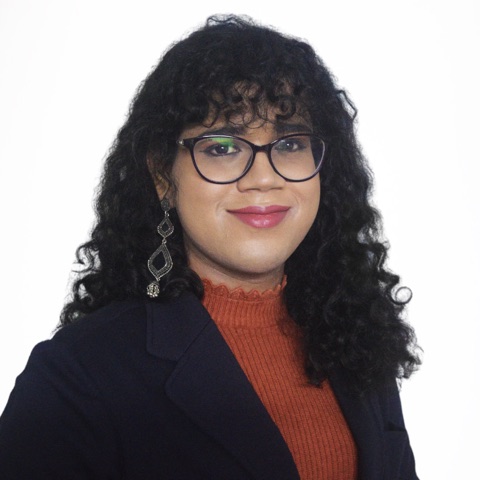
RishikaMohanta
Insect neuroscience · tools for discovery
Theorist at heart, tool-builder by skill, experimentalist by ambition, comparative neuroethologist by philosophy. I study how sensory anatomy shapes neural computation across species, and I build the rigs and software that make that question answerable.
Three questions I keep returning to
Insects keep roughly the same classes of olfactory cells across species, but those cells vary in number, distribution, and wiring, and occasionally new cell types appear. I combine comparative neuroanatomy, connectomics, behavior, imaging, and modeling to ask what computational problems these circuits are optimized to solve.
- 2023–Bilateral olfactory navigation in O. biroi and Drosophila, using FlyCLOPS and MultiBiOS to compare behavioral algorithms across species with different sensory anatomy (Ruta + Kronauer Labs).
- 2026First neuroanatomical reference brain for the clonal raider ant, published in Current Biology and now a shared community resource.
- 2018–22Locust antennal-lobe dynamics under fluctuating odor inputs (Assisi Lab).
Models I've built
I build models to make assumptions explicit and intuitions testable. Most predictions are wrong the first time, and the deviations are where the understanding is.
Connectome-based antennal-lobe model
Connectomic and computational models of the Drosophila antennal lobe that predict glomerulus-specific trade-offs between detecting an odor and telling which side it came from. Late-breaking poster at SfN 2026, with Chidera Udedibia.
ArthroScape
Simulation toolkit for arthropod behavior: chemosensory navigation, trail formation, and collective behavior emerging from individual neural rules.
github ↗Mushroom-body model of perseverance
A proposed neural implementation of olfactory perseverance, the habit-like pull toward recent choices over more rewarding ones: dopamine-gated plasticity at Kenyon cell–MBON synapses, plus a feedback loop onto reward dopamine neurons found in the connectome. The model reproduces perseverance seen in 360 flies on the 16FlYMaze, and cutting the loop abolishes it. Contributed talk at Cosyne 2024.
talk ↗Value-learning models of fly choice
Inferring the learning rules behind fruit-fly olfactory choices two ways: fitting increasingly complex reinforcement-learning models, and training tiny neural networks (under five neurons) to find rules from scratch. The tiny networks out-predicted the best RL models, and both pointed to perseverance, a habit-like tendency beyond reward-seeking. MS thesis, IISER Pune / HHMI Janelia.
thesis ↗Locust antennal-lobe network model
A network model of the locust antennal lobe asking how an odor stays recognizable when it arrives in turbulent, intermittent plumes. The structure of the sub-network an odor perturbs, readable from transient synchrony, acts as an invariant code, and intermittent sampling makes it easier to recover.
poster ↗Software I've built
Behavioral rigs
Fly-on-ball olfactory VR
Closed-loop walking arena with calibrated odor delivery, used to probe how olfactory learning shapes exploratory behavior in Drosophila.
16FlYMaze
High-throughput 2AFC olfactory maze for flies, used to probe perseverance and other decision-making strategies in olfactory learning.
FlyCLOPS optogenetic trail system
Closed-loop optogenetic system for virtual pheromone trail following. Light activation of specific olfactory receptor neurons generates bilateral odor gradients in freely-walking flies, with no chemistry required.
MultiBiOS bilateral olfactometer
Hardware-clocked bilateral odor delivery (NI-DAQ + Teensy 4.1) for comparative pheromone trail-following experiments in both ants and flies.
Papers & preprints
- 01AI-Discovered Cognitive Models Reveal Novel Insights into Human and Animal LearningbioRxiv (preprint)·2026
- 02A reference brain for the clonal raider antCurrent Biology 36(1):227–235.e3·2026
- 03Discovering Symbolic Cognitive Models from Human and Animal BehaviorICML 2025 · PMLR 267:6849–6890·2025
- 04Foraging as an ethological framework for neuroscienceTrends in Neurosciences 48(11):877–890·2025
- 05
- 06Parallel scalable simulations of biological neural networks using TensorFlow: a beginner's guideNeurons, Behavior, Data Analysis, and Theory 1·2022
- 07
- 08Deciphering value learning rules in fruit flies using a model-driven approachMS thesis · IISER Pune Digital Repository·2022
- 09Transmission dynamics of the COVID-19 epidemic in India and modeling optimal lockdown exit strategiesInternational Journal of Infectious Diseases 103:579–589·2021
- 10A field-based quantitative analysis of sublethal effects of air pollution on pollinatorsPNAS 117(34):20653–20661·2020
- 11Geographical variation in case fatality rate and doubling time during the COVID-19 pandemicEpidemiology & Infection 148:e163·2020
* equal contribution
Selected talks and posters
- Poster2026Connectomic and Computational Models Predict Glomerular-Specific Trade-offs between Detection and Lateralization in Drosophila Olfactory CircuitsSfN 2026 · Washington, DC · LBP025.01
- Talk2024
- Poster2024Enumerating and discovering discriminative tasks for probing diverse foraging strategiesCosyne 2024 · Lisbon · 1-046
- Talk2024Bridging Diverse Perspectives on the Mechanistic Basis of ForagingHHMI Janelia Conference · Speaker & Co-organizer
- Poster2023
- Poster2022Deciphering value learning rules in fruit flies using a model-driven approachSfN 2022 · San Diego
- Poster2022Invariant neural representations of fluctuating odor inputsSfN 2022 · San Diego
- Poster2021Odor coding by attractor switching in the locust antennal lobeSfN Global Connectome 2021 · virtual
- Talk2020Deciphering the Dynamics of the Locust Olfactory SystemMonsoon Brain Meeting
- Poster2019Investigating Odor-based Learning in Closed-Loop Fly-on-Ball VRJanelia Undergraduate Scholar Symposium · APDRC5
Teaching, mentorship & service
- 2026–Mentor to a Ruta Lab research assistant: FlyCLOPS operation, experimental design, and data analysis.
- 2025–Community Book Club at Rockefeller. Secured a microgrant from the Office of University Life; brought Dr. Azra Raza and Dr. Nathan Lents into conversation with students, postdocs, and staff across departments.
- 2024Co-organizer · HHMI Janelia Conference on “Bridging Diverse Perspectives on the Mechanistic Basis of Foraging”. Brought together systems neuroscientists, ethologists, ecologists, and theorists; seeded a Trends in Neurosciences review.
- 2023–Annual volunteer · Science Saturday (RockEDU): interactive tables for the Kronauer ant lab and Ruta optogenetics lab.
- 2023–Journal Club Mentor · Rockefeller Summer Neuroscience Program.
- 2023Lead TA · Neuromatch Deep Learning Summer School: supervised 6 TAs, mentored 10 international students across 3 weeks (120 h).
- 2023Mentor · Tri-Institute Mentorship Initiative: 1-on-1 mentoring for a graduate school applicant.
- 2021Project TA · Neuromatch Deep Learning: mentored 7 international student groups across 3 weeks.
- 2021TA · Neuromatch Computational Neuroscience: daily tutorials for 6 students.
- 2017Workshop instructor · IISER Pune: Python for data analysis and introduction to deep learning.
Academic path
- 2023–PhD · David Rockefeller Graduate Program in BiosciencesRuta + Kronauer Labs · The Rockefeller University
- 2022–23Research Technician & Offsite ConsultantTurner Lab · HHMI Janelia
- 2017–22Integrated BS-MS in Biology · CGPA 9.8/10 · with DistinctionIISER Pune
- 2018–21Student ResearcherAssisi Lab · IISER Pune
- 2019Janelia Undergraduate ScholarTurner Lab · HHMI Janelia
- 2018Summer intern · chemical ecologyNICE Lab · NCBS Bangalore
Reach out